
Bitcoin ETFs Explained: How They Work in 2026


A bitcoin ETF is an exchange-traded fund that tracks the price of bitcoin, letting investors gain exposure through an ordinary brokerage account without buying or storing the coin themselves. The arrival of US spot bitcoin ETFs in January 2024 was one of the most significant developments in crypto’s move into mainstream finance, and by mid-2026 these funds held more than $73 billion in assets.
Key takeaways
- A spot bitcoin ETF holds real bitcoin and issues shares that track its price. You own the shares, not the coins.
- US spot bitcoin ETFs launched in January 2024 and held about $73.7 billion across roughly 1.22 million BTC by June 2026.
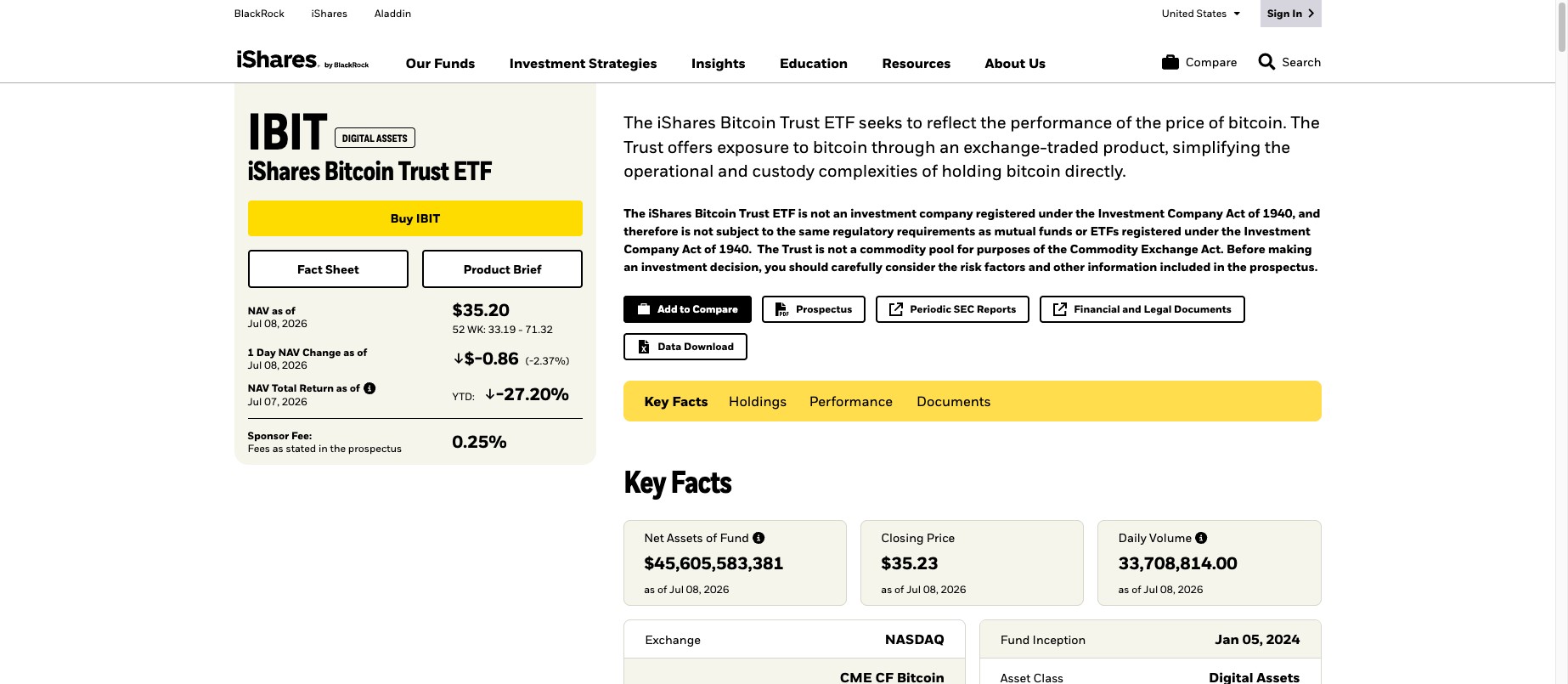
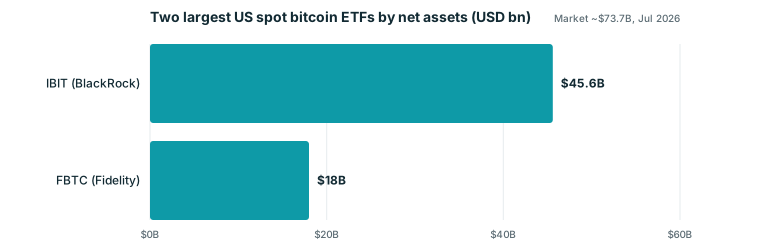
- BlackRock’s IBIT dominates, with about $45.6 billion in net assets and a 0.25 percent sponsor fee.
- The trade-off: convenience and custody are handled for you, but you cannot move, spend, or self-custody the underlying bitcoin.
What is a bitcoin ETF?
A bitcoin ETF is a fund that trades on a stock exchange like a share and tracks the price of bitcoin. A spot bitcoin ETF holds actual bitcoin and issues shares that move with its price. When you buy a share, you get price exposure to bitcoin without handling wallets, private keys, or exchanges yourself. The fund’s job is simple on paper: hold the coins, manage the custody, and let the share price track the market.
How a bitcoin ETF works behind the scenes
Every spot bitcoin ETF relies on a small group of authorized participants, typically large trading firms, that create and redeem shares in bulk. When demand for the ETF rises, an authorized participant delivers bitcoin, or cash used to buy bitcoin, to the fund in exchange for new shares, which then trade freely on the stock exchange. When demand falls, the process runs in reverse and shares are redeemed. This creation and redemption mechanism keeps the ETF’s share price closely aligned with the actual price of bitcoin.
The bitcoin itself sits with a custodian, a specialized firm responsible for keeping the fund’s holdings in cold storage. Investors never touch the underlying coins; they hold a security that represents a claim on a slice of the fund’s holdings.
You can see all of this on a live fund page. BlackRock’s iShares Bitcoin Trust (IBIT) publishes its net assets, sponsor fee, and inception date in the open:
Spot vs futures ETFs
| Type | What it holds | Tracks price via |
|---|---|---|
| Spot ETF | Actual bitcoin | Direct holdings |
| Futures ETF | Futures contracts | Derivatives, not coins |
Spot ETFs are generally seen as cleaner exposure because they hold real bitcoin, while futures ETFs rely on contracts that can drift from the underlying price. Futures based bitcoin ETFs reached the market years before spot products were allowed, since regulators were initially more comfortable with contracts traded on regulated futures exchanges than with funds holding the coin itself. Spot bitcoin ETFs only became available in the United States in January 2024, after regulators approved several applications at once following years of rejections.
Why do bitcoin ETFs matter?
Bitcoin ETFs matter because they gave regulated money a simple, compliant way to buy bitcoin, and the flows have been large. By June 2026, US spot bitcoin ETFs held about $73.7 billion across roughly 1.22 million BTC. One fund, BlackRock’s IBIT, accounts for the majority of that.
The reasons the wrapper matters:
- Access. Investors and institutions can buy bitcoin exposure inside existing brokerage and retirement accounts, without opening a crypto exchange account first.
- Custody is handled. The fund stores the bitcoin, removing the need to manage wallets yourself.
- Demand. Large inflows into ETFs add steady, regulated buying. IBIT alone has drawn more than $62 billion in cumulative net inflows since launch.
- Legitimacy. A regulated, exchange-listed product gives financial advisors and compliance departments a way to recommend bitcoin exposure that fits inside existing rules.
Retail investors vs institutional investors
The ETF wrapper changes access differently depending on who is buying. Retail investors get a familiar way to add bitcoin exposure to a brokerage or retirement account alongside stocks and bonds, without learning how to secure a wallet or choose an exchange.
Institutions face a different set of constraints. Pension funds, endowments, and asset managers often operate under mandates that require regulated, custodied securities rather than direct crypto holdings. Before spot ETFs existed, many of these investors could not hold bitcoin at all. The ETF structure gave them a compliant path into the asset for the first time, which is why analysts watch ETF fund flows so closely as a signal of institutional sentiment.

What does a bitcoin ETF cost?
A bitcoin ETF charges an ongoing management fee, called an expense ratio or sponsor fee, deducted from the fund’s assets over time. IBIT’s sponsor fee is 0.25 percent per year, and competing funds sit in a similar low range after a fee war at launch. That is the price of convenience: the fund handles custody and trading, and takes a small annual cut for it.
The trade-offs
An ETF means you do not directly hold the bitcoin, so you cannot move or spend it on-chain, use it in decentralized applications, or transfer it to another wallet. If the fund provider ever closes the ETF, shareholders are cashed out rather than handed bitcoin. The price also still moves with the market, and it moves hard: IBIT’s own page showed a year-to-date return of about -27 percent in mid-2026.
Buyers who want true ownership and full control still prefer to hold bitcoin directly and self-custody it. Investors who would rather diversify across several cryptocurrencies through a normal exchange account can start with our guide to buying crypto.
Frequently asked questions
Is a bitcoin ETF the same as owning bitcoin? No. You own a share that tracks the price, not the bitcoin itself, so you cannot withdraw or spend it on-chain.
How big is the bitcoin ETF market? US spot bitcoin ETFs held about $73.7 billion in assets across roughly 1.22 million BTC as of June 2026, with BlackRock’s IBIT holding the largest share at around $45.6 billion.
Why would I buy an ETF instead of bitcoin directly? ETFs fit inside existing brokerage and retirement accounts and handle custody for you, which some investors prefer for simplicity and tax reporting.
Do bitcoin ETFs affect the price of bitcoin? They can. Strong inflows mean the fund buys more bitcoin, adding regulated demand, while heavy outflows add selling pressure.
What fees do bitcoin ETFs charge? Each fund charges an annual expense ratio deducted from assets. IBIT’s sponsor fee is 0.25 percent, and rival spot funds cluster in a similar low range.
Can I hold a bitcoin ETF in a retirement account? In many cases yes, since spot bitcoin ETFs trade like any other exchange-listed security, subject to what your specific broker or plan allows.
Are there ETFs for other cryptocurrencies? Yes. Spot ETFs have also launched for other major assets such as ethereum, following the same creation and redemption structure used for bitcoin funds.
Related reading
Learn the asset behind the fund in what is bitcoin, or buy it yourself with our how to buy bitcoin guide.
Last updated July 9, 2026. Fund data from iShares (IBIT); market totals from spot bitcoin ETF flow trackers.