
Binance vs Coinbase: Which Exchange Should You Use?

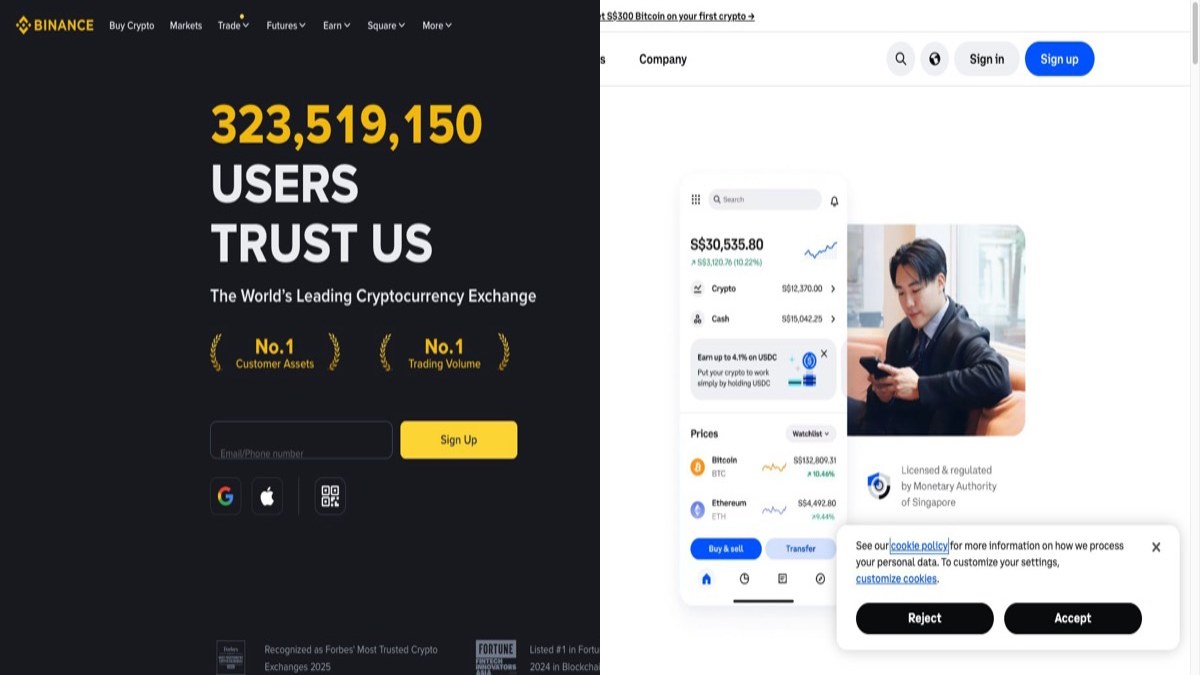
The short answer: choose Binance for lower fees and a wider coin selection, and choose Coinbase for the simplest, most regulated beginner experience. Both are reputable, well-established exchanges, so the right pick depends on whether you care more about cost or convenience. This guide walks through fees, ease of use, coin selection, payment options, and security side by side, so you can match the platform to how you actually plan to use it rather than picking on brand recognition alone.
Head-to-head comparison
| Factor | Binance | Coinbase |
|---|---|---|
| Trading fees | Lower (from ~0.1%) | Higher on standard, moderate on Advanced |
| Coin selection | Very wide | Solid, fewer altcoins |
| Ease of use | Moderate | Excellent |
| Regulation | Varies by region | Regulated US, publicly listed |
| Advanced tools | Futures, staking, margin | Advanced Trade, select rewards |
| Best for | Cost and variety | Beginners and peace of mind |
Fees
Binance is the clear winner on cost. Its maker/taker fees start around 0.1 percent and fall further with volume. Coinbase’s standard fees are higher, though its Advanced Trade mode narrows the gap for users willing to switch interfaces. Over many trades, the difference adds up, especially for anyone trading often rather than buying and holding. Full detail is in our Binance review and Coinbase review.
Ease of use
Coinbase wins here. Its interface is built for first-time buyers, which is why we list it as a beginner option in how to buy bitcoin. Binance packs in more tools, which is powerful but busier, and it can take longer for a new user to find the simple buy screen among the trading, futures, and earn tabs.
Deposits and payment methods
Both exchanges support the usual mix of bank transfers and card payments, and on both platforms bank transfers tend to be the cheaper route while card purchases carry a premium. Binance’s global reach means the specific payment methods available to you depend heavily on your country and can include local bank rails that are not offered everywhere. Coinbase’s payment options are somewhat more standardized across the markets it operates in, in keeping with its more conservative, compliance-first approach. If a specific payment method matters to you, such as a particular local bank transfer option, it is worth checking availability on each platform directly before committing, since this is one of the areas that changes most often and varies most by region.
Coin selection and features
Binance lists far more coins, so it suits anyone who wants altcoins beyond bitcoin, ethereum, and solana. Coinbase covers the major coins most people actually buy, with a more curated, conservative list. On features, Binance offers futures, margin, and staking within the same platform, while Coinbase keeps its advanced tools in a separate Advanced Trade interface and offers rewards on a narrower set of eligible coins, a concept explained in our crypto staking guide.
Security and regulation
Both offer two-factor authentication and hold reserves against customer assets. Coinbase carries the added weight of US regulation and public-company disclosure requirements, which appeals to cautious buyers. Binance has broader global reach but has also drawn regulatory scrutiny in a number of jurisdictions over the years, a pattern covered in more depth in our crypto regulation overview. Whichever you pick, move long-term holdings off the exchange into a wallet you control, such as a Ledger, rather than leaving them in a custodial account.
Who should choose which
Choose Binance if:
- Fees and coin selection are your top priority
- You are comfortable navigating a busier interface
- You want futures, margin, or staking available on the same platform
Choose Coinbase if:
- You are making your first crypto purchase
- Regulatory oversight and a publicly listed company matter to you
- You would rather pay a bit more for simplicity
Many people even start on Coinbase for simplicity, then move to Binance as they get comfortable and fee-conscious. There is nothing wrong with holding accounts on both and choosing per purchase, using Coinbase for a quick, reassuring buy and Binance when cost or coin selection matters more for a specific trade.
The bottom line
- Pick Binance if you want low fees and a big coin selection.
- Pick Coinbase if you want the easiest, most regulated first purchase.
Frequently asked questions
Is Binance cheaper than Coinbase? Generally yes. Binance’s standard trading fees are lower, especially at higher volume.
Is Coinbase safer than Binance? Both are secure. Coinbase carries the added assurance of US regulation and being publicly listed, which some users value.
Can I use both exchanges? Yes, many users keep accounts on both and choose per purchase based on fees and coin availability.
Which one has more coins? Binance lists far more coins overall. Coinbase’s list is smaller but leans toward established, liquid assets.
Which is better for a total beginner? Coinbase, mainly because of its simpler sign-up and purchase flow. Binance is a reasonable second platform once you are comfortable with the basics.
Do Binance and Coinbase both offer staking? Both offer some form of rewards for eligible coins, though the specific coins, terms, and structure differ and change over time. Check current terms on each platform before committing funds.
Related reading
- How to buy crypto, for a broader beginner walkthrough
- What is blockchain, for background on the underlying technology
- Crypto wallets explained, for moving funds off either exchange