
Coinbase Review: Fees, Safety, and Best for Beginners?

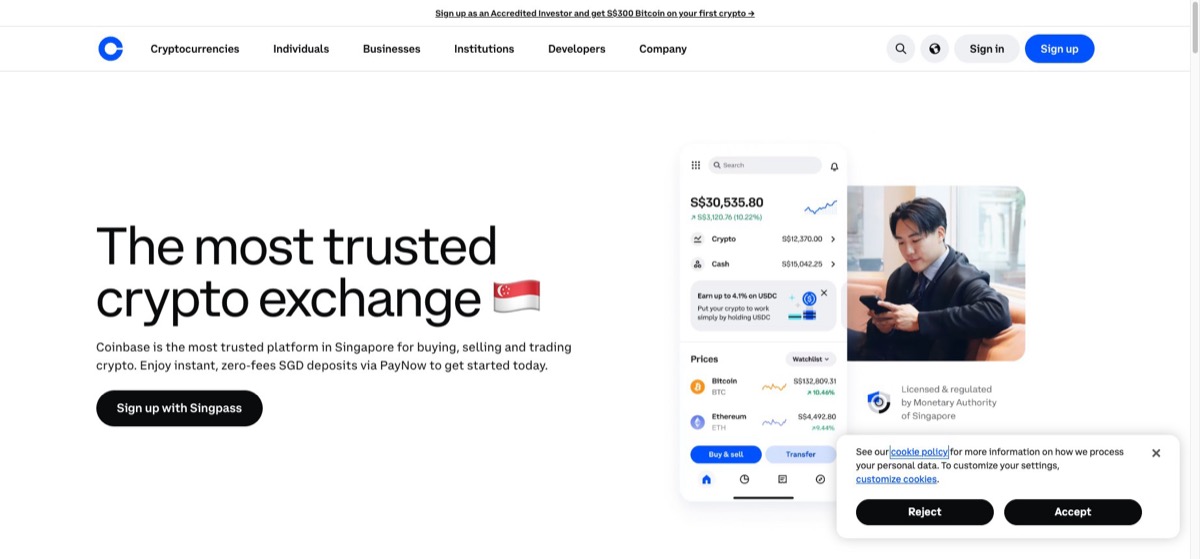
Coinbase is one of the most beginner-friendly cryptocurrency exchanges and a publicly listed US company, which makes it a common first stop for new buyers. Its strength is simplicity and regulatory standing. Its weakness is cost: standard fees are higher than most competitors. This review explains the trade-off, what you can actually do on the platform, and who it suits.
Verdict at a glance
Coinbase is best for beginners who value a simple, trusted, regulated platform and will accept higher fees for that peace of mind. Cost-focused or high-volume users will pay less elsewhere.
| Category | Rating |
|---|---|
| Ease of use | Excellent |
| Regulation and trust | Excellent |
| Security | Strong |
| Fees | Moderate |
| Advanced features | Moderate |
Fees
Standard Coinbase fees are higher than many rivals, though its Advanced Trade interface offers maker/taker pricing much closer to the market norm for users willing to switch away from the simple buy button. That gap between the beginner interface and the advanced one is worth knowing about before you settle into a habit of using the simple version for every purchase. If keeping fees low is your main priority, compare the two platforms directly in Binance vs Coinbase.
Ease of use
This is where Coinbase shines. Account setup, identity verification, and a first purchase are about as simple as crypto gets, which is why it appears in our how to buy bitcoin walkthrough as a beginner option. The mobile app and website both walk new users through each step, and recurring buys can be automated so you do not have to think about timing the market.
Supported coins and features
Coinbase supports a large, curated list of coins that leans toward established, liquid assets rather than the long tail of small-cap tokens you would find on a larger exchange. You can buy bitcoin, ethereum, and solana directly, alongside a broad range of other listed assets. Coinbase also runs a separate self-custody app, Coinbase Wallet, and offers rewards on select coins for eligible users, similar in principle to the staking concepts covered in our crypto staking guide. The curation cuts both ways: it screens out some of the more speculative tokens, which suits cautious buyers but frustrates anyone chasing smaller altcoins.
Deposits, withdrawals, and support
Coinbase supports the standard on-ramps most beginners expect: bank transfers, debit cards, and in many regions direct integration with local payment rails. Bank transfers are generally the cheapest way to fund an account, while card purchases carry a premium, a pattern that holds across the industry rather than being unique to Coinbase. Withdrawals to a bank account typically take longer than withdrawals of crypto to an external wallet, since the former routes through traditional banking rails. Coinbase also offers customer support through in-app help, email, and a public status page for outages, which matters more than it sounds once you have money on the line and something goes wrong at an inconvenient time.
Security and regulation
Coinbase is a regulated, publicly traded company and stores the large majority of customer assets offline in cold storage. It supports two-factor authentication, account-level protections, and insurance coverage on certain custodial balances, details of which are published on the platform itself. Being a public company also means it is subject to financial disclosure and audit requirements that private exchanges are not, which is part of why cautious first-time buyers gravitate toward it. As always, no custodial platform is completely risk-free, so move long-term holdings to a wallet you control, as explained in our crypto wallets guide.
Who it is for
Pick Coinbase if you want the easiest, most reassuring on-ramp into crypto and are willing to pay a premium for that simplicity. It particularly suits people making their first purchase, or anyone who values regulatory oversight over squeezing out the lowest possible fee. If you would rather minimize fees and do not mind a busier interface, read our Binance review instead. It is a weaker fit for active traders chasing the lowest possible cost per trade, or for anyone who wants a long list of small-cap altcoins in one place, since the curated listing approach that makes Coinbase feel trustworthy also limits selection.
Pros and cons
Pros
- Among the simplest sign-up and purchase flows in the industry
- Publicly listed and subject to regulatory oversight and disclosure
- Stores the large majority of assets offline
- Advanced Trade option narrows the fee gap for users who want it
Cons
- Standard fees are higher than most competitors
- Curated coin list means fewer small-cap altcoins than larger exchanges
- Advanced features are tucked behind a separate interface, not the default view
- Higher fees compound noticeably for frequent traders
Frequently asked questions
Is Coinbase safe? Coinbase is a regulated US exchange that stores most assets offline and offers strong account security. No exchange is fully risk-free, so use self-custody for long-term holdings.
Why are Coinbase fees so high? Standard fees pay for its simplicity and regulatory compliance. Using Advanced Trade lowers costs considerably.
Is Coinbase good for beginners? Yes. It is one of the easiest platforms for a first crypto purchase.
Coinbase or Binance for a beginner? Coinbase is simpler, Binance is cheaper with more coins. See our full Binance vs Coinbase comparison for the complete breakdown.
Does Coinbase support staking rewards? Yes, for select coins that support it, though eligibility and terms vary and change over time. Check current terms on the platform before committing funds.
Can I move my coins off Coinbase to my own wallet? Yes, and it is recommended for any holdings you plan to keep long term. Withdraw to a wallet you control rather than leaving large balances on the exchange.
Related reading
- How to buy crypto, for a broader look at getting started
- What is blockchain, for background on the technology
- Ledger review, for a hardware wallet option once you are ready to self-custody