Binance Review 2026: Fees, Features, and Is It Safe?

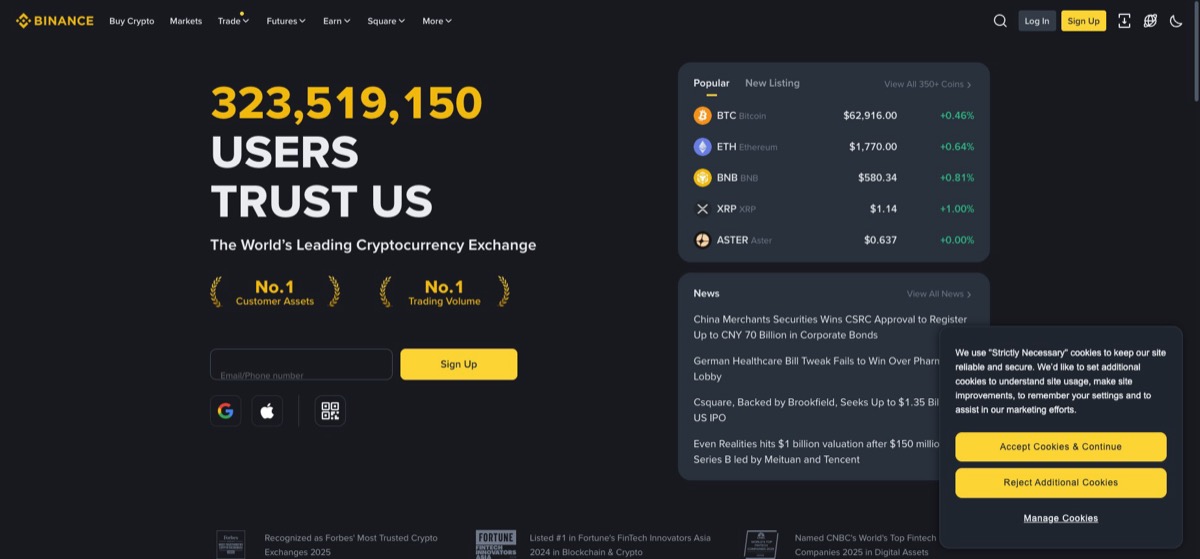
Binance is the largest cryptocurrency exchange in the world by trading volume, handling roughly 91,000 BTC, or about $5.7 billion, in spot trades on a typical day in mid-2026. For most users its main draw is low fees and a very wide coin selection. The trade-off is an interface that can overwhelm beginners and availability that varies by country. This review breaks down what it costs, how safe it is, what you can actually do on the platform, and who it suits.
Verdict at a glance
Binance is best for cost-conscious users who want low fees and access to a large range of coins, and who are comfortable with a busier interface. Outright beginners may prefer a simpler platform first.
| Category | Rating |
|---|---|
| Fees | Excellent |
| Coin selection | Excellent |
| Ease of use | Moderate |
| Security | Strong |
| Beginner friendliness | Moderate |
Key takeaways
- Binance charges 0.1 percent per spot trade at the base tier, dropping to 0.075 percent when you pay fees in BNB.
- It is the largest exchange by volume, with about $5.7 billion in daily spot turnover and a stated 300 million-plus users.
- The wide coin list and advanced features are a genuine advantage for active traders, but they make the interface busy for beginners.
- Binance has faced regulatory action in several markets, which is worth weighing against its fee savings.
What are Binance’s fees?
Binance uses a maker/taker model that starts at 0.1 percent per trade at the base tier and drops as your volume rises or if you pay fees in its own BNB token. Its published fee schedule shows the base rate falling to 0.075 percent with the BNB discount, and lower still across the VIP tiers:
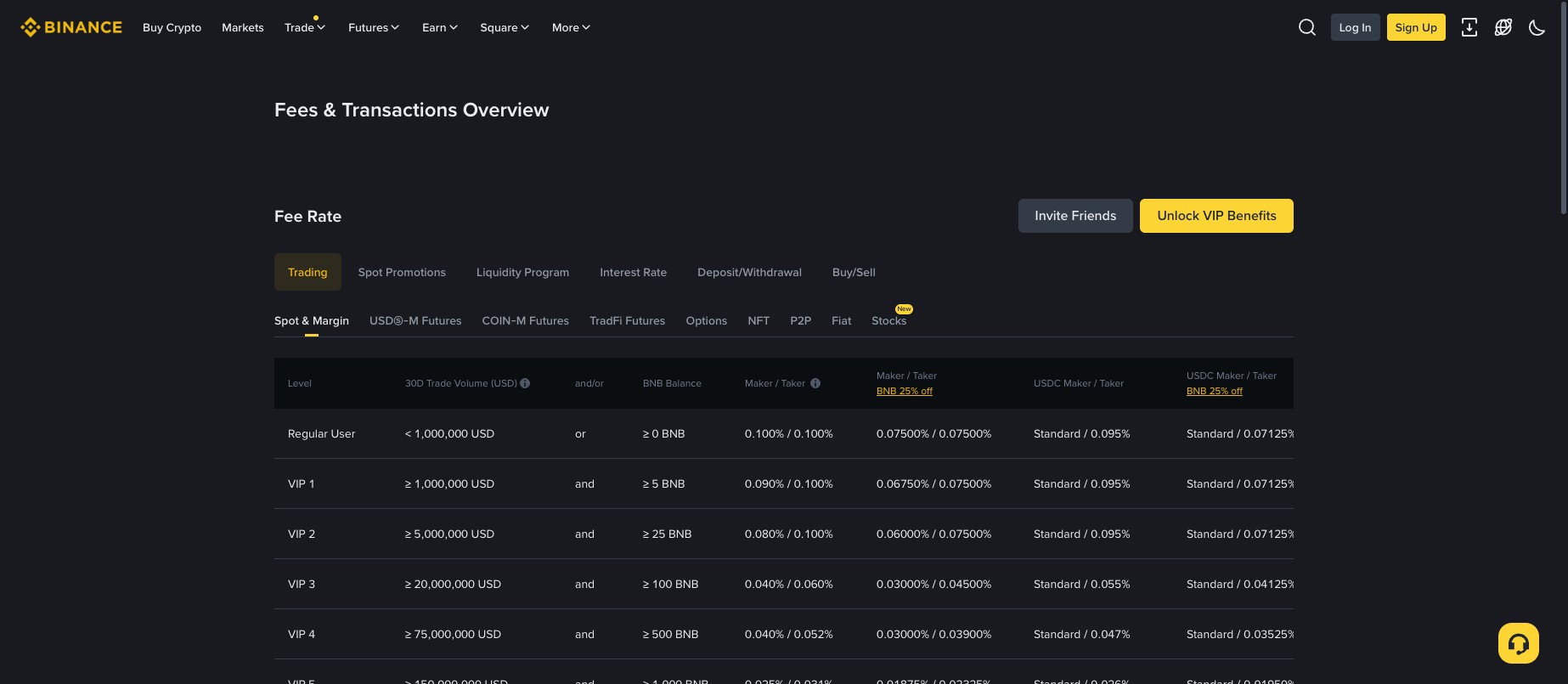
That 0.1 percent base rate is among the lowest headline fees on the market. Bank-transfer deposits are usually cheap or free, while card purchases cost more, which is true across the industry (see how to buy crypto). Fee tiers scale with your trailing 30-day trading volume, so active traders end up paying noticeably less than casual buyers on the base tier. Withdrawal costs vary by coin and network rather than being a single flat fee, so check the schedule for the specific asset before moving funds off the exchange.
Supported coins and trading features
Binance lists hundreds of coins, far more than most beginner-focused platforms. If you want access to smaller altcoins alongside bitcoin, ethereum, and solana, the selection is a real advantage over more conservative exchanges. Beyond simple spot trading, Binance runs a futures and derivatives arm aimed at experienced traders, plus staking and other yield products for coins that support proof-of-stake style rewards, in the same spirit as what we cover in our crypto staking guide. That breadth is useful for active users, but it is also part of why the interface can feel crowded to someone who just wants to buy a coin and hold it.
Is Binance safe?
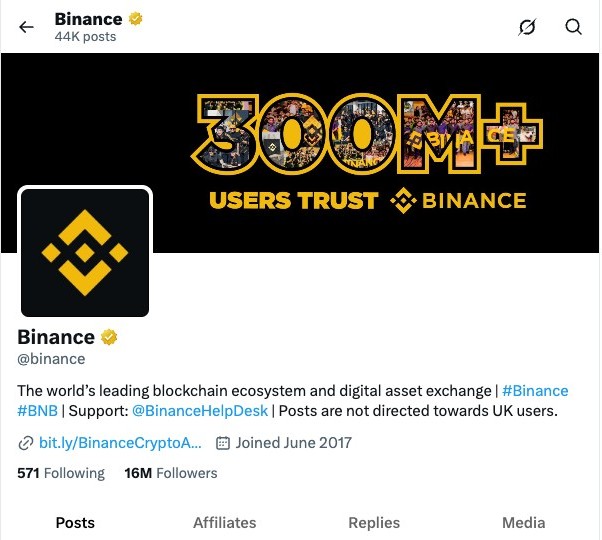
Binance offers two-factor authentication, withdrawal address whitelisting, and maintains a user-protection reserve fund built from a portion of trading fees. It also promotes its scale as a trust signal, claiming more than 300 million users worldwide since it launched in 2017:
Scale is not the same as safety, though. As with any exchange, you are trusting Binance to hold your coins, so the standard advice applies: move long-term holdings to your own wallet rather than leaving large balances on a platform you do not control. See our crypto wallets guide and the Ledger review for how self-custody works. Binance has also drawn regulatory scrutiny and enforcement actions in a number of jurisdictions, part of a broader pattern as regulators work out how to treat crypto exchanges, a topic we cover in our crypto regulation overview. That history is worth weighing alongside the fee savings, even though the platform has continued to process enormous volume without a major platform-side breach of customer funds.
Who is Binance for?
Choose Binance if low fees and coin variety matter most and you are willing to spend a little time learning the interface. Active traders who want futures, margin, or staking in one place will find the extra features genuinely useful rather than clutter. If you want the simplest possible first purchase, or you would rather pay a bit more for a cleaner screen and the reassurance of a regulated public company, compare it with our Binance vs Coinbase breakdown first.
Pros and cons
Pros
- Low headline trading fees, 0.1 percent at base and lower with BNB or volume
- One of the widest coin selections of any major exchange
- Extra features, including futures and staking, for users who want more than spot trading
- Established security tooling, including two-factor authentication and withdrawal whitelisting
Cons
- Interface and feature set can overwhelm first-time users
- Availability and product offerings vary significantly by country
- Has drawn regulatory attention in several markets over the years
- Card purchases and some payment methods cost more than bank transfers
Frequently asked questions
Is Binance safe? Binance uses strong security features and a reserve fund, but no exchange is risk-free. Use two-factor authentication and self-custody for long-term holdings.
Is Binance good for beginners? It is usable for beginners but has a steeper learning curve than simpler platforms because of its many features.
What are Binance’s fees? Spot trading starts at 0.1 percent per trade and drops to 0.075 percent with the BNB discount, falling further at higher VIP tiers. Card purchases cost more than bank transfers.
Is Binance available in my country? Availability and features vary by region and have changed over time. Check the platform for your specific country before signing up.
How does Binance compare to Coinbase? Binance generally wins on fees and coin selection, while Coinbase wins on simplicity and regulatory reassurance. Our Coinbase review covers the other side of that trade-off.
Can I stake crypto on Binance? Yes, for coins that support it. Returns and terms vary by asset and change over time, so check the current terms on the platform before committing funds.
Related reading
- How to buy bitcoin, for a step-by-step first purchase walkthrough
- What is blockchain, for a primer on the technology behind the coins you are trading
- Bitcoin ETF explained, for context on institutional crypto adoption
Last updated July 9, 2026. Fee data from binance.com; volume data from CoinGecko.